
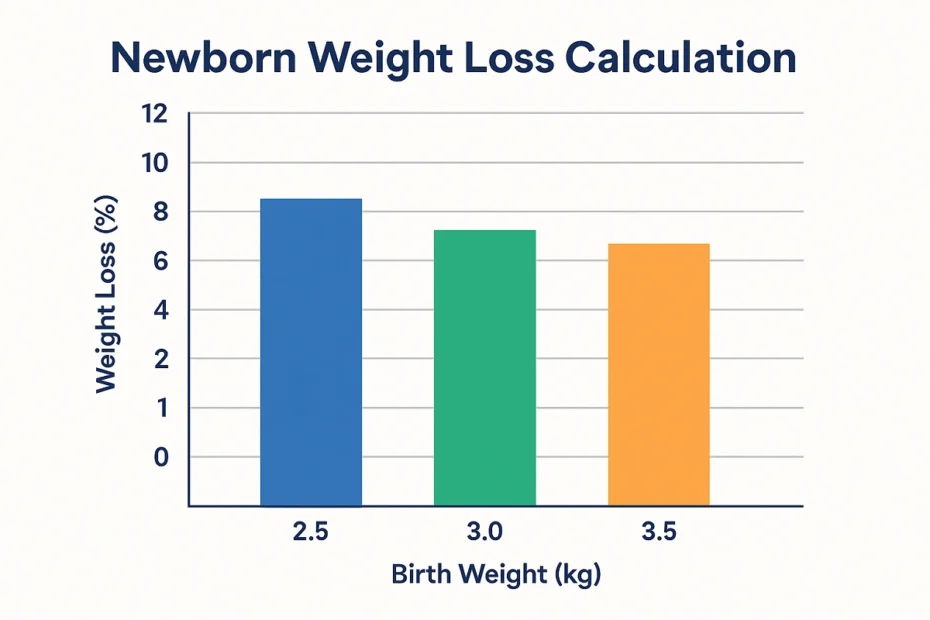
Having a newborn is a happy time, but it also brings many questions and worries, especially about changes in the baby’s weight. One of the most common topics that pediatricians discuss with new parents is newborn weight loss calculation. Understanding what’s normal, how to track it, and when to be concerned is vital for ensuring your baby’s healthy start in life.
In this article, we’ll break down what newborn weight loss means, how to calculate it accurately, what factors influence it, and when parents should seek medical advice.
Why Newborns Lose Weight After Birth
Many parents may be surprised, but it’s normal for newborns to lose some weight in the first few days after they are born. This isn’t necessarily a sign of a problem. Most babies are born with extra fluid in their bodies, and this is gradually lost in the first 5 to 7 days.
Other reasons include:
-
Transitioning from the womb to outside life
-
Learning to feed effectively (breastfeeding or bottle feeding)
-
Limited colostrum intake before full milk comes in
Healthcare professionals expect a certain percentage of weight loss during this period and monitor it accordingly using newborn weight loss calculation methods.
What is Normal Newborn Weight Loss?
Generally, a newborn is expected to lose up to 7-10% of their birth weight within the first few days. Here’s a breakdown:
-
0-7% weight loss: Normal and usually not concerning
-
7-10% weight loss: Borderline, requires closer monitoring
-
More than 10% weight loss: May indicate feeding or health issues
Most newborns gain back their birth weight by about 10 to 14 days old. If not, this might require interventions or feeding support.
How to Perform a Newborn Weight Loss Calculation
To determine if your newborn’s weight loss is within a healthy range, you can follow a simple calculation. The formula is:
Weight Loss (%) = [(Birth Weight – Current Weight) ÷ Birth Weight] × 100
Example Calculation:
-
Birth weight: 3.5 kg
-
Current weight (Day 3): 3.2 kg
Weight loss = [(3.5 – 3.2) ÷ 3.5] × 100 = 8.57%
This result suggests that the baby has lost 8.57% of their birth weight, which would require closer monitoring but isn’t necessarily alarming.
Regularly using newborn weight loss calculation can help caregivers and health professionals track the baby’s health and feeding effectiveness.
When Should You Be Concerned?
While weight loss is normal to an extent, there are red flags to watch for:
-
Loss exceeds 10% of birth weight
-
No weight gain after the first 7–10 days
-
Persistent signs of dehydration (e.g., fewer than 6 wet diapers/day after day 5)
-
Poor feeding behavior or prolonged feeding sessions
In such cases, health professionals may suggest interventions like:
-
Lactation consulting
-
Supplementing feeds
-
More frequent feeding schedules
Correct and timely newborn weight loss calculation ensures that problems are identified early.
Tools and Charts for Tracking
Parents and caregivers are encouraged to use:
-
Pediatric growth charts
-
Digital baby scales (preferably the same scale for consistency)
-
Feeding logs
-
Mobile apps for tracking weight and diaper output
Pediatricians use standardized charts from the World Health Organization (WHO) and the Centers for Disease Control and Prevention (CDC) to interpret newborn weight loss calculation results against developmental expectations.
Factors That Affect Newborn Weight Loss
Several factors can influence how much weight a newborn loses or gains:
1. Type of Feeding
-
Breastfed infants may lose slightly more initially but catch up by the second week.
-
Formula-fed infants usually regain weight faster due to measured intake.
2. Delivery Method
-
Babies born via C-section may have more fluid and show greater initial loss.
3. Gestational Age
-
Preterm infants often have more challenges maintaining and gaining weight.
4. Medical Conditions
-
Jaundice, infections, or tongue-tie can make it harder for a baby to feed and gain weight.
Understanding these nuances can help in interpreting the results of your newborn weight loss calculation correctly.
How to Support Healthy Weight Gain
If your newborn is struggling with weight gain, here are practical tips:
-
Ensure proper latching during breastfeeding
-
Feed more frequently – 8 to 12 times per day is typical for newborns
-
Pump and bottle-feed if breastfeeding is not sufficient
-
Seek guidance from lactation consultants early on
-
Monitor output (wet and dirty diapers) for signs of effective feeding
A well-informed approach combined with accurate newborn weight loss calculation ensures your baby stays on a healthy track.
The Role of Healthcare Providers
Routine visits to a pediatrician in the first month are crucial. These visits include:
-
Weight checks
-
Physical assessments
-
Feeding evaluations
Parents should never hesitate to raise concerns, even if the baby’s weight loss appears “normal.” No one knows your baby better than you. Your awareness, combined with a consistent newborn weight loss calculation, gives your child the best start.
Final Thoughts
Monitoring your baby’s weight during the early days is one of the most important things you can do as a new parent. While weight loss is expected, understanding the range of normal, learning how to perform a newborn weight loss calculation, and recognizing when to seek help will ease your worries and promote your baby’s well-being.
Always trust your instincts, keep good records, and work closely with healthcare professionals. Early support and intervention—when necessary—can make all the difference in your child’s health journey.