
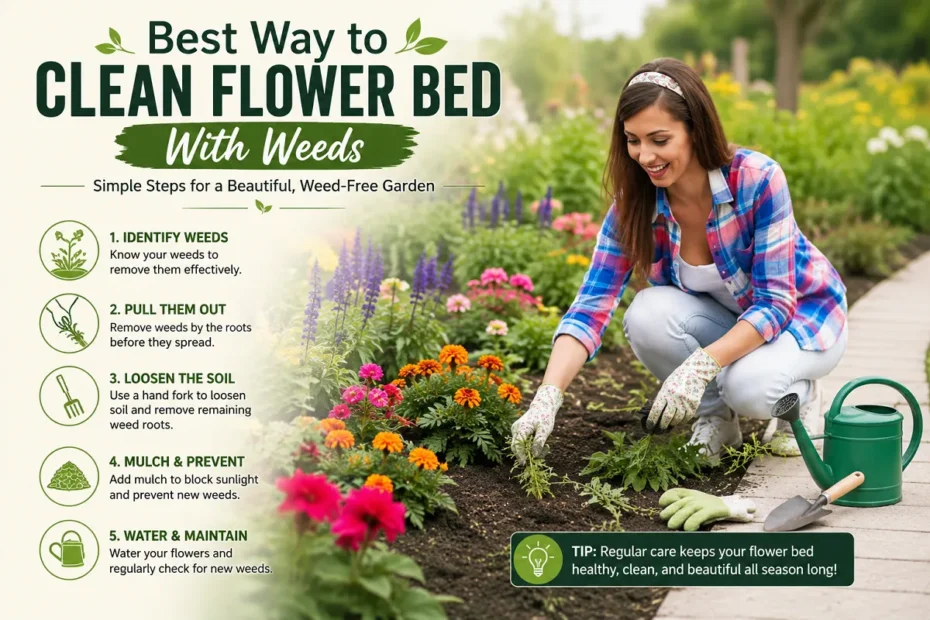
Is your flower bed lush with weeds and needless plants? If yes, you are not the only one. Many home gardeners face this problem when they do not give them proper time or when the weather changes; weeds grow in flower beds. In this subject, we will teach you in detail the best way to clean out a flower bed overgrown with weeds, so that your garden may look beautiful again.
Steps before cleaning
Before cleaning your flower bed, follow some important steps. First, you need to check it and see which plants are healthy and should stay, and which plants arweedsed to remove. If you find any difficulty in differentiating between the weeds and the healthy plants, ask an expert gardener, such as the Google Lens mobile app.
Tools and Supplies you need
Gardening gloves for cleaning, a small hand shovel, a weeding fork, a soil cultivator, a metal rake, and large garbage bags are required. If your flower bed is very big, renting a soil cultivator can be workable, and always wear safety gloves because some weeds can irritate.
Useful ways to clean weeds
Remove weeds by hand
For flower beds, hand-weeding is the safest and easiest method. Clean the flower bed when the soil is a little moist for best results, such as one or two days after rain. Wet/moist soil makes it easier to pull out the roots of weeds. Hold the weed from the ground and then pull slowly so the roots come out. If you pull it with force, the root may break, and the weeds can grow again.
Solarization (Use of the heat from the sun to kill weeds)
If the flower bed is covered with many weeds, then solarization is a better technique to follow. In this method, the whole flower bed is covered with a thin black plastic sheet. The heat of the sun increases the temperature of the soil under the plastic, which helps to kill the weeds, their seed,s and roots. This method usually takes 4 to 6 weeks and is beneficial in the summer.
Use of Cardboard and Mulch
Another easy and eco-friendly method is the use of cardboard sheets. Firstly, remove the big weeds with your hands, then spread the cardboard sheets all over the flower bed and cover it with 2 to 3 inch mulch (wood chips or tree bark). The cardboard blocks the sunlight, and the weeds underneath are killed. Over time, the cardboard breaks down and becomes part of the soil.
Use Landscape Fabric
After cleaning the flower bed, the use of landscape fabric is useful to stop weeds from growing again. This special fabric lets the water gointo then soil and blocks the light. After cleaning the flower bed, spread the cloth, a nd fix it with landscape staples at a 1-foot distance. Cut an X-shaped hole where you want to plant new flowers. Cover the fabric with a layer of mulch to make it look neat and beautiful.
Make the soil healthy after cleaning
When weeds are left in a flower bed for a long time, they compete for nutrients from the soil. It is important to re-fertilize the soil after cleaning. Add two to three inches of organic fertilizer to the flower bed and mix it into the soil to a depth of approximately one foot using a shovel. This process improves soil drainage and gives new plants the nutrients they require for healthy growth.
Applicable Advice for Planting New Flowers
The best time to plant new flowers is after you have cleared withered blooms from the flowerbeds and ensured the soil is free of weeds. You should select plants that are easy to grow in the local climate. Consult a nearby nursery to find out which plants bloom in your specific environment. Maintaining proper spacing between plants is crucial, which gives them room to spread, ensures enough and sufficient air circulation,n and allows them to reach their full size. The arrival of spring is the ideal time for planting because the cool weather helps plant roots to establish themselves strongly.
How can weed regrowth be prevented?
The best thing to do after clearing the land is to stop weeds from growing, and daily upkeep is the solution. Be sure to check it once a week and cut off any new grass that starts to grow. Apply a layer of top dressing that is 2-4 inches thick, which blocks sunlight and stops seeds from growing.
Final Words
Cleaning out weeds from a flower bed takes time and effort, but the value is worth it. Whether you do it by hand, use solarization, or use ready-made mulch, the real success lies in regular maintenance. By following the methods defined above, you can keep your flower bed free of weeds and full of flowers. Remember that the best way to clean out a flower bed overgrown with weeds is one that you can always do, and keep your garden healthy.
FAQs:
Which is the quickest way to clean the flower bed full of weeds?
The immediate way is to first pull out the big weeds by hand and then use a soil cultivator to loosen the remaining roots and prepare the soil. For a small bed, this can be completed in an hour.
Should weed killers (herbicides) be used?
Chemical herbicides can be good, but they can also damage nearby plants. If they must be used, relate only in a targeted manner, meaning only on the leaves of the weed. Natural choices such as agricultural energy, gas, can also be used.
How fat should the mulch be in a flower bed?
The mulch layer should be two to four inches fat. A small number of layers allows light to reach the weed seeds, whereas a large number of layers prevents water from passing through the soil.
What is the best time to harvest herbs?
Early spring is a good time to cut weeds, because the soil is not hard and the weeds have not yet hardened. Though cleaning can be completed in any era after the rain.
Does Solarizat kill useful plants too?
Yes, solarization is a non-selective strategy that destroys all plants in the covered area. Therefore, use this strategy only when the bed needs to be completely replanted, and no useful plants need to be saved.
For any suggestions or changes, please contact us.