
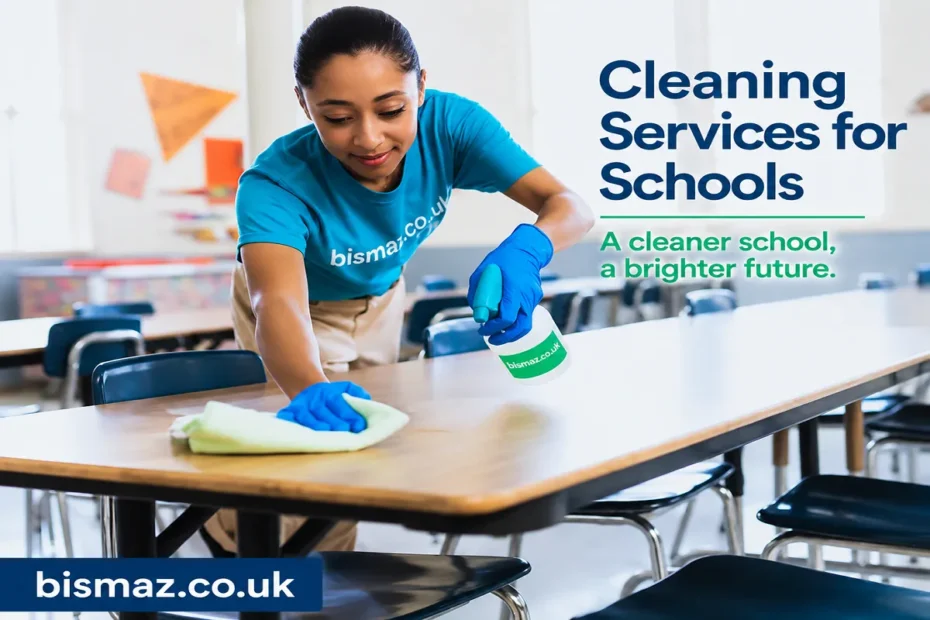
Every school administrator understands a simple truth: a clean school is not just about appearances. It directly affects how often students show up, how well they learn, and how safe everyone inside the building remains. Yet with tighter budgets, shrinking custodial staff, and rising hygiene expectations, maintaining that standard has become harder than ever. Professional cleaning services for schools offer a structured, scalable solution, but choosing and managing them well requires knowing what to look for. This guide covers everything school administrators, facilities managers, and procurement teams need to know to make informed decisions.
Why School Cleanliness Goes Beyond Aesthetics
Schools are among the most high-contact environments in any community. Hundreds of students, teachers, and staff cycle through classrooms, restrooms, cafeterias, and gyms every day, touching shared surfaces constantly. That volume of activity creates ideal conditions for the rapid spread of bacteria, viruses, and allergens.
Research consistently links school cleanliness to student health outcomes. Studies have found that inconsistent cleaning leads to increased absenteeism, as minor illnesses spread quickly when high-touch surfaces go unsanitized. Students with asthma and allergies are particularly vulnerable, since dust, mold spores, and pollen accumulate rapidly in poorly maintained buildings and directly worsen respiratory conditions.
The academic consequences are measurable, too. Students who attend clean schools show higher levels of concentration and better memory retention. A clean environment also reduces psychological stress — clutter-free, orderly spaces lower anxiety among students and staff, which is a meaningful factor in overall school performance.
Teacher retention is another consideration that often goes unaddressed. Staff who work in clean, well-maintained facilities report higher job satisfaction and take fewer sick days, creating more continuity in the classroom throughout the year.
What Professional Cleaning Services for Schools Typically Include
Not all school cleaning contracts are structured the same way. Understanding the scope of services helps administrators set realistic expectations and avoid gaps in coverage.
Daily Cleaning Tasks form the baseline of any school cleaning program. These include disinfecting high-touch surfaces such as door handles, light switches, desks, chairs, and computer keyboards; cleaning and restocking restrooms; emptying bins; mopping hard floors; and wiping down cafeteria tables and food preparation areas.
Weekly and periodic cleaning go deeper. This includes vacuuming carpeted areas in libraries and offices, sanitizing gymnasium equipment, cleaning interior windows, and addressing locker rooms and changing areas. These tasks prevent the long-term buildup of dirt and allergens that daily routines cannot fully address.
Seasonal Deep Cleaning is typically scheduled during school breaks, summer, winter, and spring. This is when cleaning teams address areas that are inaccessible or impractical to clean during the school year: behind furniture, ceiling vents and HVAC diffusers, carpets using hot-water extraction, gymnasium floors, kitchen hoods, and tile grout. Schools that schedule these sessions in advance secure better availability and avoid the risk of reopening a facility that has not been properly reset.
Day Porter Services provides on-call cleaning during school hours. Day porters handle reactive tasks, spills, restroom checks between classes, lobby upkeep during peak entry and exit times, maintaining cleanliness throughout the day rather than only before or after hours.
Key Areas That Demand Specialized Attention
Certain zones within a school carry a disproportionate share of health risk and require targeted protocols:
Restrooms are the most critical sanitation priority. Proper restroom cleaning goes beyond wiping surfaces; it requires disinfectants capable of eliminating pathogens on toilet seats, sinks, faucet handles, and door hardware. Restocking soap and paper towels is not optional maintenance; it directly supports hand hygiene, which is one of the most effective tools for reducing illness transmission.
Cafeterias and Food Service Areas require food-safe cleaning protocols. Grease buildup on cooking surfaces and exhaust hoods creates fire hazards and fails health inspections. Kitchen cleaning should comply with local health code requirements, with documentation available for inspection.
Gymnasiums and Athletic Areas present slip hazards when floors are improperly maintained. Gym floors often require specialized stripping, refinishing, and non-slip treatments that fall outside standard janitorial scope. Locker rooms need daily disinfection to prevent the spread of skin infections common in shared athletic environments.
Classrooms with Shared Technology, desktop computers, tablets, smartboards, and shared lab equipment — need microfiber-based disinfection rather than spray-and-wipe approaches that can damage electronics or leave residue.
How to Evaluate a School Cleaning Provider
Selecting a cleaning service for your school is a procurement decision with real health and safety implications. These are the factors that separate a reliable provider from one that underdelivers:
School-Specific Experience. Commercial cleaning expertise does not automatically translate to school environments. Look for providers with documented experience in K-12 or higher education facilities, and ask for references from comparable institutions. Understanding the unique requirements of classrooms, gyms, labs, and cafeterias is not generic knowledge.
Customized Cleaning Plans. A one-size-fits-all approach does not work for schools. The right provider will conduct a facility walkthrough, assess your specific needs, and propose a plan aligned to your academic calendar, including break windows for deep cleaning.
Disinfection Standards. Reputable school cleaning companies use hospital-grade disinfectants, color-coded microfiber cloths (to prevent cross-contamination between areas), and flat mops that do not reuse dirty water. Ask providers to confirm compliance with CDC guidelines for educational facility sanitation.
Background Checks and Training. Every person who enters a school building should be background-checked and trained in both cleaning protocols and appropriate conduct around students. This is a non-negotiable baseline, not a premium add-on.
Green Cleaning Options. Schools with younger students, or those pursuing sustainability certifications, should ask about Green Seal-certified products and low-VOC cleaning solutions. Reducing chemical exposure supports better indoor air quality and aligns with increasingly common district-level environmental policies.
Accountability Mechanisms. Ask how the provider handles quality control. Regular supervisory walkthroughs, documented inspection reports, and a named account manager who responds promptly to issues are signs of a professionally run operation.
In-House vs. Outsourced Cleaning: The Current Landscape
A significant operational shift has been underway across the United States. Budget shortfalls have forced many school districts to cut custodial staff, leaving remaining teams unable to maintain adequate cleaning standards. In 2025, many administrators are turning to outsourced janitorial services not simply to cut costs, but to close the gap left by staffing reductions.
Outsourcing school cleaning offers predictable per-service costs, access to specialized equipment that most districts cannot justify owning, and consistent staffing even when individual employees are unavailable. The tradeoff is reduced direct oversight, which is why vetting providers carefully and establishing clear service level agreements matters so much.
Hybrid models are also common: keeping a small in-house custodial team for daily responsiveness while contracting out periodic deep cleaning, floor care, and specialized services.
Final Words
Professional cleaning services for schools are not a luxury or a line item to defer, they are a direct investment in student health, attendance, and academic performance. The evidence is clear: cleaner schools produce better health outcomes, fewer absences, and environments where both students and staff can function at a higher level.
For administrators navigating budget pressures, the key is not whether to prioritize cleanliness, but how to structure and procure cleaning services efficiently. That means understanding the full scope of what a quality provider delivers, asking the right questions during procurement, and treating cleaning standards as part of the school’s core commitment to the people inside it.
Frequently Asked Questions
How often should schools schedule professional cleaning services?
High-traffic areas, restrooms, hallways, cafeterias, and classrooms should be cleaned and disinfected daily. Carpets, gymnasium floors, and windows benefit from weekly or bi-weekly attention. Deep cleaning of less-accessible areas should be scheduled at least twice per year, ideally during summer and winter breaks.
What is the difference between cleaning, sanitizing, and disinfecting in a school setting?
Cleaning removes visible dirt and debris from surfaces. Sanitizing reduces the number of germs on a surface to a safe level as defined by public health standards. Disinfecting kills the majority of remaining pathogens. A professional school cleaning program integrates all three, with disinfection prioritized for high-touch surfaces and restrooms.
Are green cleaning products effective enough for schools?
Yes. EPA-registered, Green Seal-certified cleaning products meet the same disinfection efficacy standards as conventional products while reducing chemical exposure for students and staff. For schools with young children or students with respiratory conditions, green cleaning products are often the preferred standard.
How do schools verify that a cleaning service is doing the job properly?
Request regular inspection reports and walkthrough documentation from your provider. Some administrators also conduct their own spot-checks using surface swab tests. The clearest signal of consistent quality is a provider that assigns a dedicated account manager and proactively communicates about scheduling changes or areas of concern.
What should be included in a school cleaning contract?
A thorough contract should specify the frequency and scope of all cleaning tasks, the products and equipment to be used, background check requirements for all staff entering the building, quality assurance procedures, response times for urgent issues, and provisions for scheduling around the academic calendar, including holiday deep cleans.
Can outsourced cleaning services handle specialized areas like labs and commercial kitchens?
Reputable providers can, but this should be confirmed explicitly during procurement. Science labs, commercial kitchens, and pool facilities carry specific regulatory requirements that not all janitorial companies are equipped or certified to address. Ask for documentation of relevant training or certifications before signing.
For any suggestions or changes, please contact us.